CH-9002
How we play our chimes - and improvise when something goes wrong.
[with commentary by the editor - CSZMost pictures on this page can be individually opened in a larger version, using an option of your Web browser.]
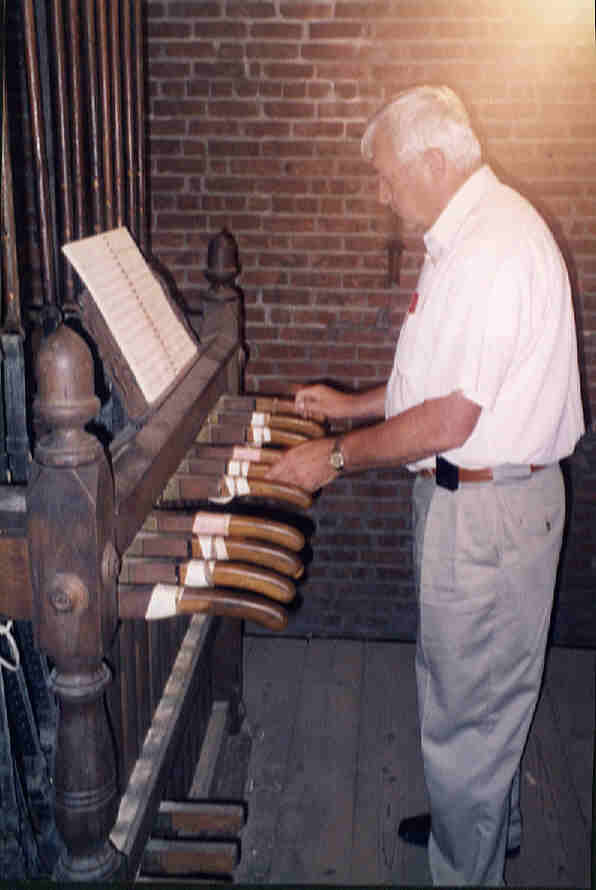
[Left]
My chime (at St. Patrick's, Troy, NY. TY-12-1923) is shown first to illustrate what a "normal" American made chimestand with pump handles will generally resemble.
An Ellacombe setup will have vertical ropes, no handles and may be anchored from below.
[See photo below.]
There is hardly a tower or chimestand where you will not see something new.
Chimers and chime founders often had problems and solved them in ingenious ways.
1. This chime was notated in 'D'.
On Christmas Eve, I went out of town with music to transpose into 'C' for an electric keyboard.
Only brought back a copy in 'C'.
Panicked.
Then labeled 3x5 cards or could have used 'post-it notes' and rubber banded them to pump handles.
Liked 'C' so much that I have rung that way since.
You might want to do this if going to another chime.
Use your scale on the 3x5 cards and enjoy.
2. Emergency repair, an original 1923 belt broke, had to use what was at hand.
3. The 4# and 7 handles are in lock-down position.
4. The lockdowns at West Point are ropes from the floor.
5. There are foot pedals for the lower 4 bells.
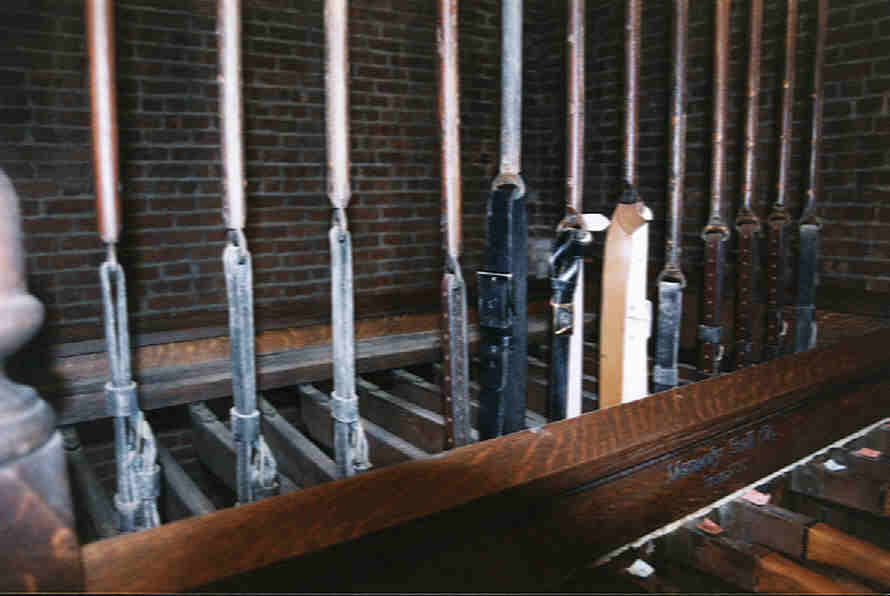
[Right]
The view of the handles to rod connection, with the music stand lifted off.
1. The rods are lower where the 4# and 7th are locked down.
2. 1/2/3/8/12 have the original brittle belts. One might break while playing.
3. 4/9/10/11 have belts made by a tack shop.
4. 5/6/7 have regular personal disposable belts gerrymandered to do the job.
5. Most (but not all) keyboards are linear.
Lock-downs solved the sharp/flat problem.
[Left]
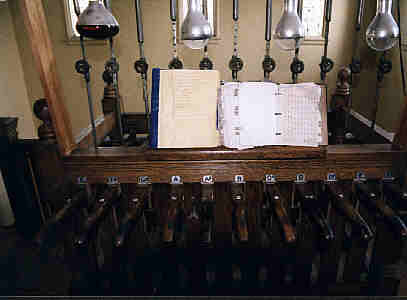
This WT-11-1913 at Port Hope, Ontario is on the landing leading to the choirloft.
1. A frame is built over it to hold the lights (and a heat lamp?).
2. The music shown is in rows, playing by numbers on top row, letters on bottom row.
3. The connectors to the rods can be adjusted at chimestand level (see center one).
[Right]
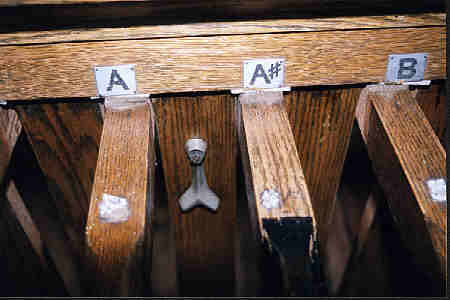
4. Closeup of a normal lock-down
(the inverted Y-shaped toggle, here not in use).
Also blackened handle for sharps.
5. Handles might be numbered, lettered or both.
There is no standard for all chimes, so many differ.
One chimer might play by numbers, while another uses regular music.
[Left]
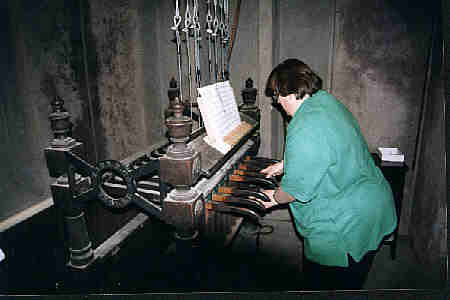
Joni Brensinger, self taught, plays the JO-09-1884 chime.
1. This is the only Jones of Troy, NY chimestand still active.
2. Problem with cables creasing paper was solved by moving 2nd rack lower.
3. Note the distinctive Jones bell foundry circular connector emblem.
[Right]
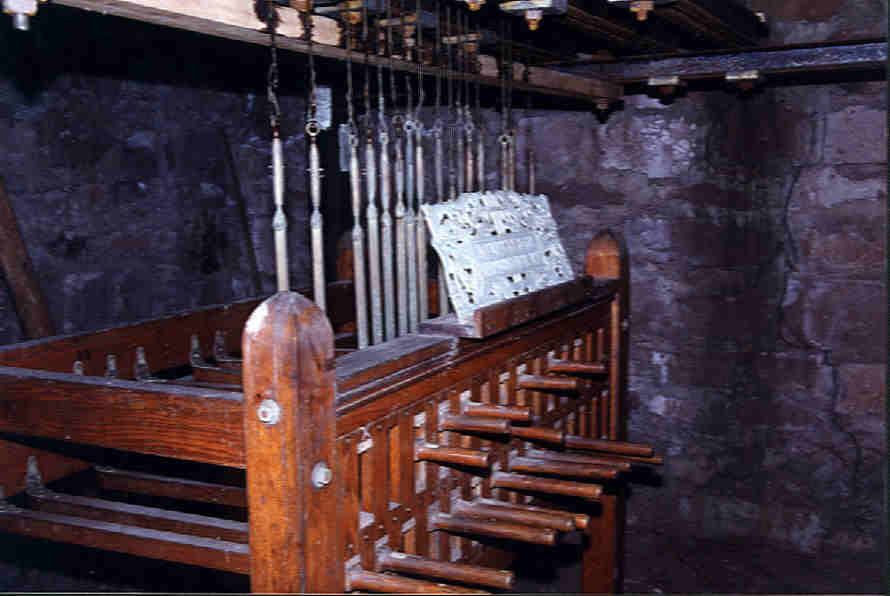
1. This WT-16-1929 at Upper Montclair, NJ, upper/lower chimestand was soon electrified, with good
reason.
[namely, that access to this keyboard required climbing a vertical ladder]
2. Was redone again in 2000, wonder what it looks like now.
[Left]
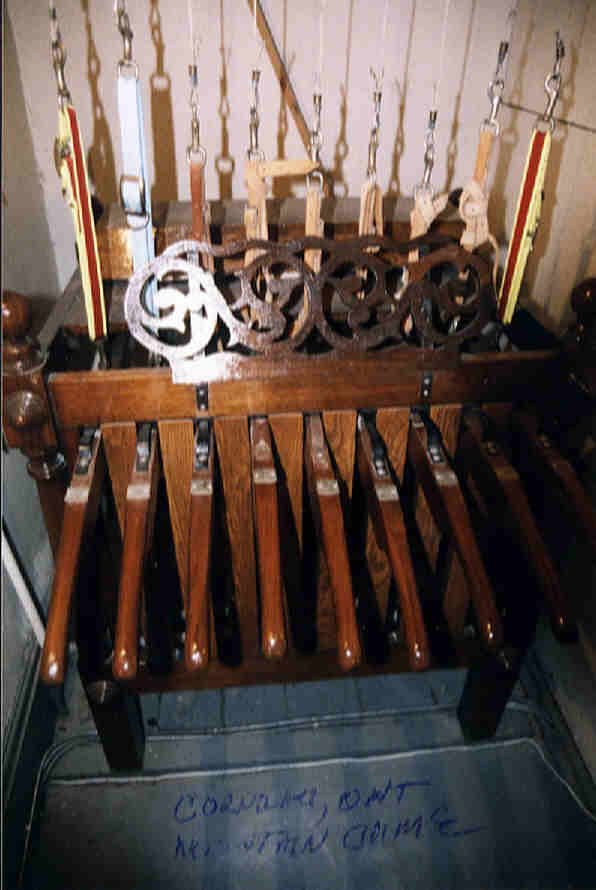
This MS-09-1885 is at Cornwall, Ontario, in a space between 2 buildings.
1. It has exceptionally long pump handlkes.
2. There are spring steel devices attached to reduce sound of handles returning to top.
3. Combination of belts and pet store collars connecting to rods.
[Right]
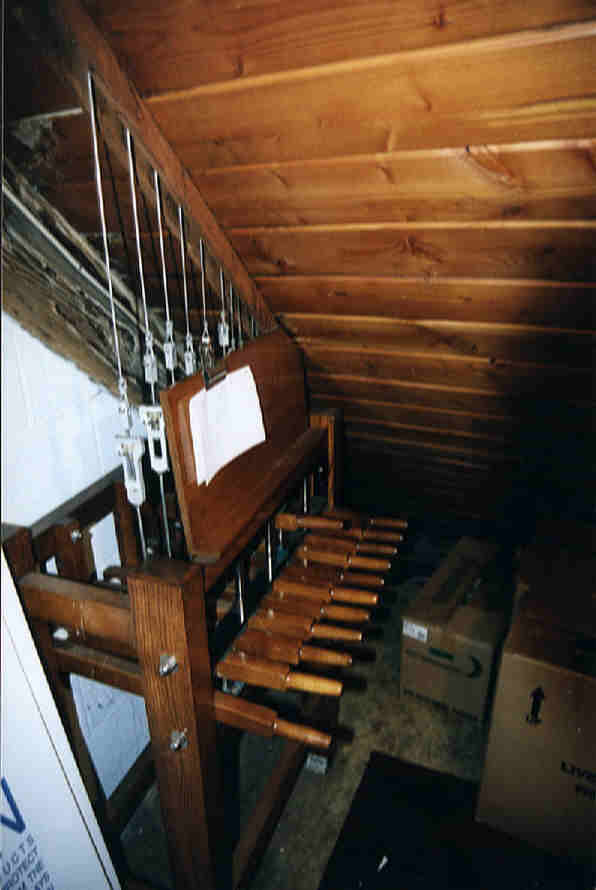
This CH-12 is literally in a closet at Tamaqua, PA. Watch your head!
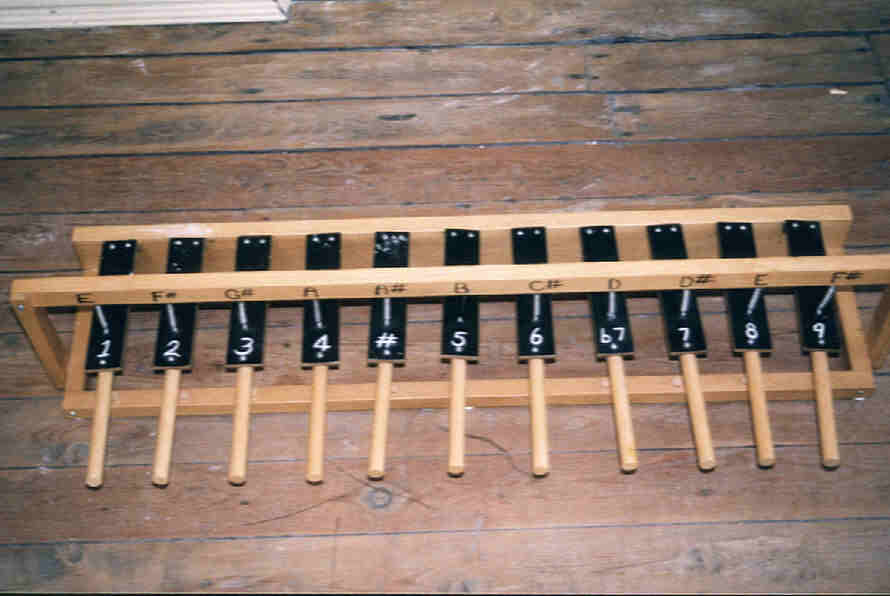
An uncomplicated practice keyboard for both numbers and letters.
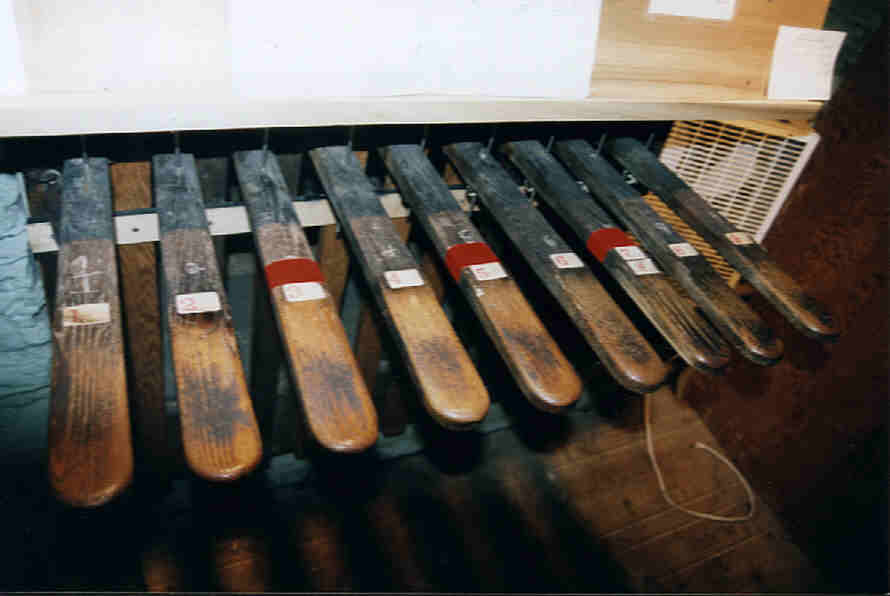
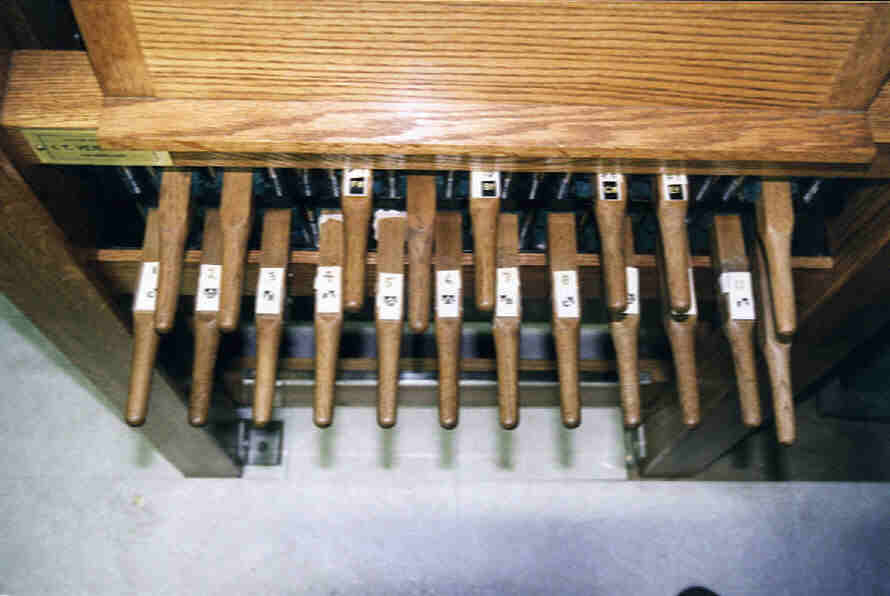
[Left] Chimestand for the only known steel bell chime in North America [and in the world] at Lancaster, PA. Made by Naylor Vickers, Sheffield, England in 1861. [Bells by NV; chimestand locally made at a later date.] Sound is fine.
[Right] Newer chimestand for WH-15-1924 at Oshawa, Ontario. A Carillon type chimestand [also known as a baton keyboard] .
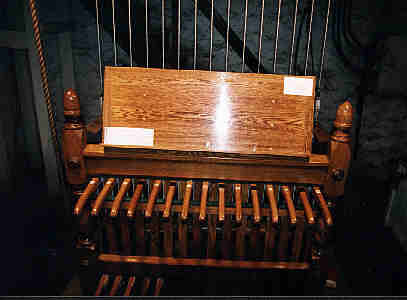
Unidentified 15-note chimestand with 5 pedals. Rope to swing tenor bell is at left; stairway to belfry behind. Music rack is undoubtedly a replacement for the original.
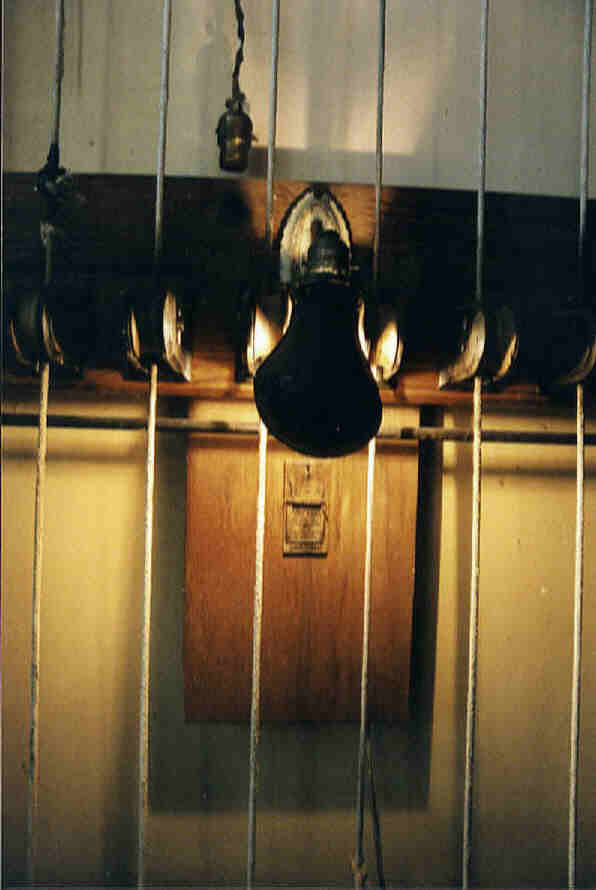
[Left]
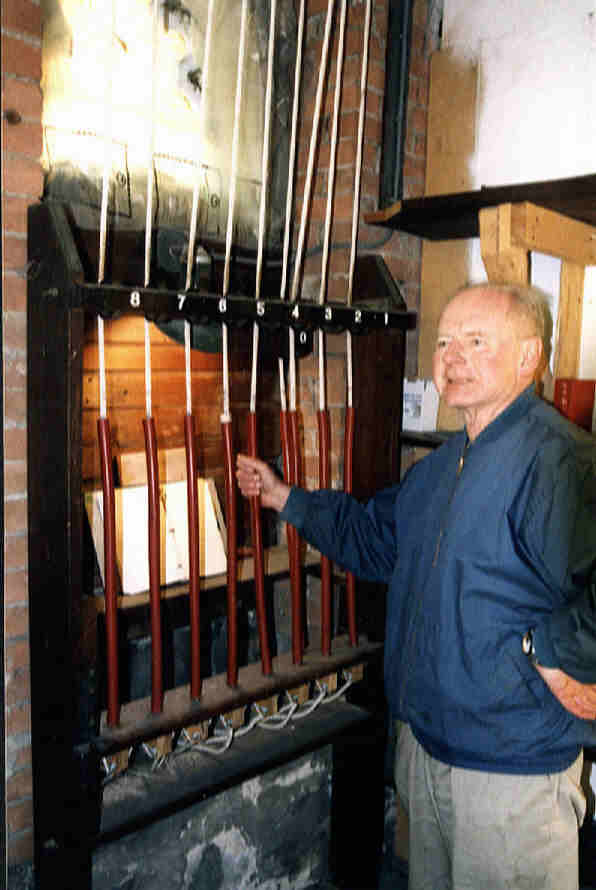
WH-09-1906 taut rope Ellacombe setup at Ottawa, Ontario.
Note 1-8 and '0' for flat 7th.
[Center and right]
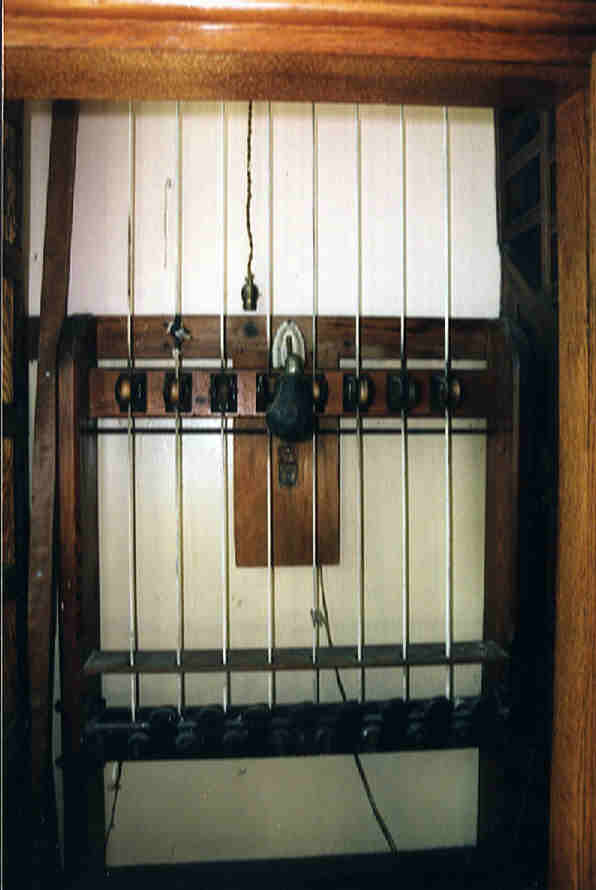
The TA-08-1922 taut-rope chime at Georgetown, Ontario has an interesting innovation.
Yes, that IS a mouse trap used as a music holder.
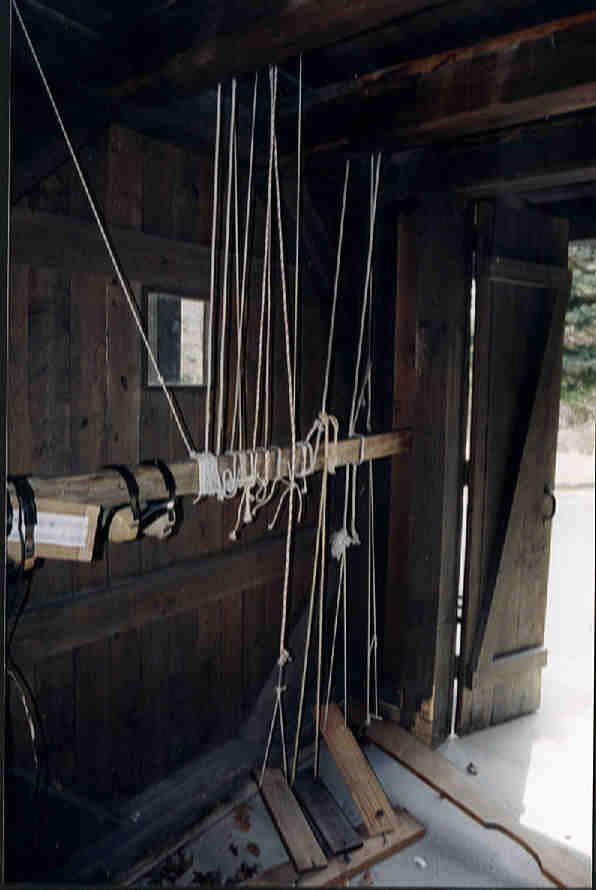
This a typical Zvon.
Just thought I would let you know.
[Note the four foot pedals, as well as the ear protectors awating use.
Also, there is no music rack, because zvons are played to rhythmic patterns, not tunes.]
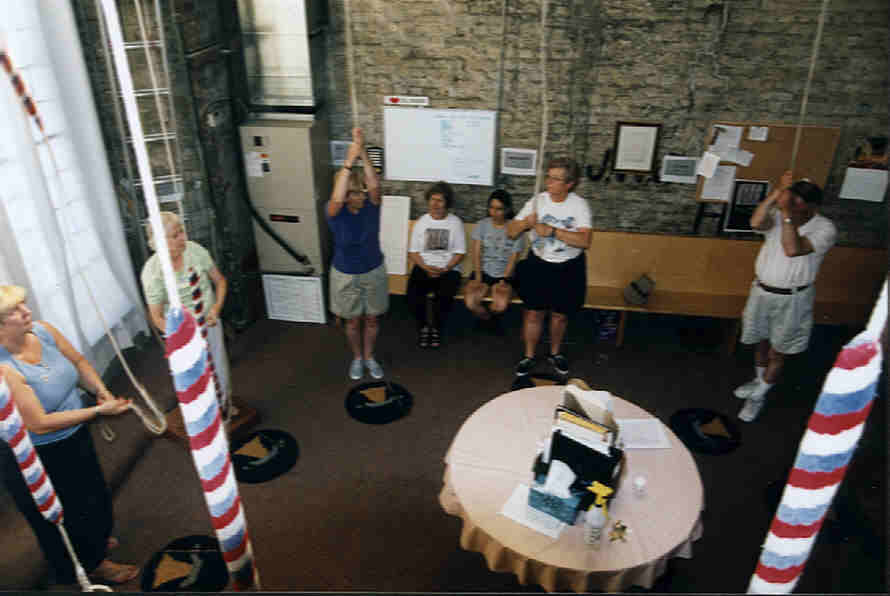
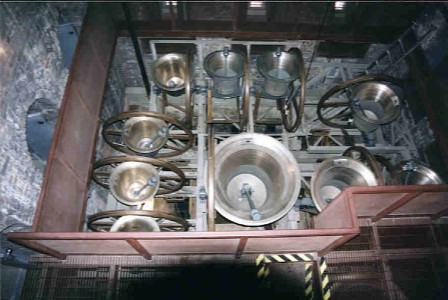
[Left]
Change ringing on an 1824+ set of bells at Toronto, Ontario.
[Right]
Note that the bells are at the ready in 'up' position.
[Left]
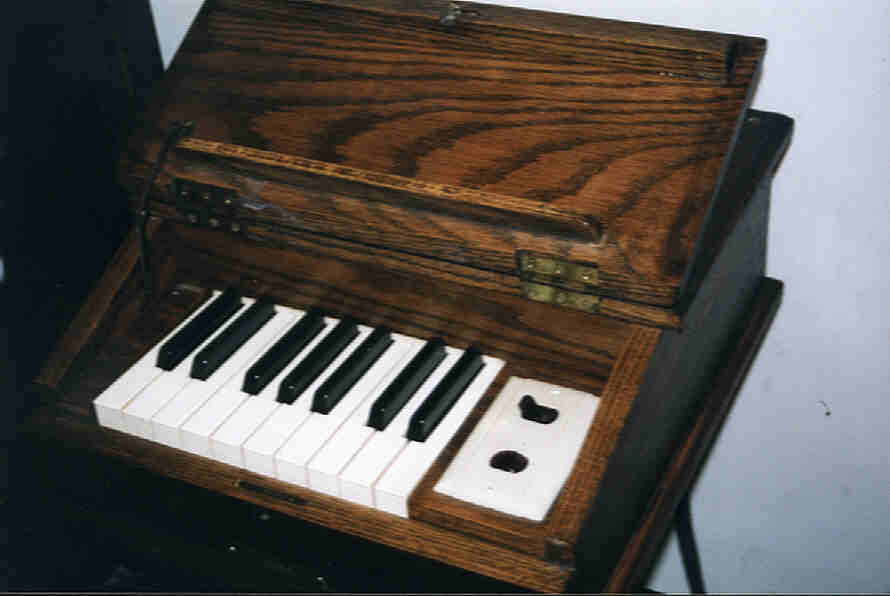
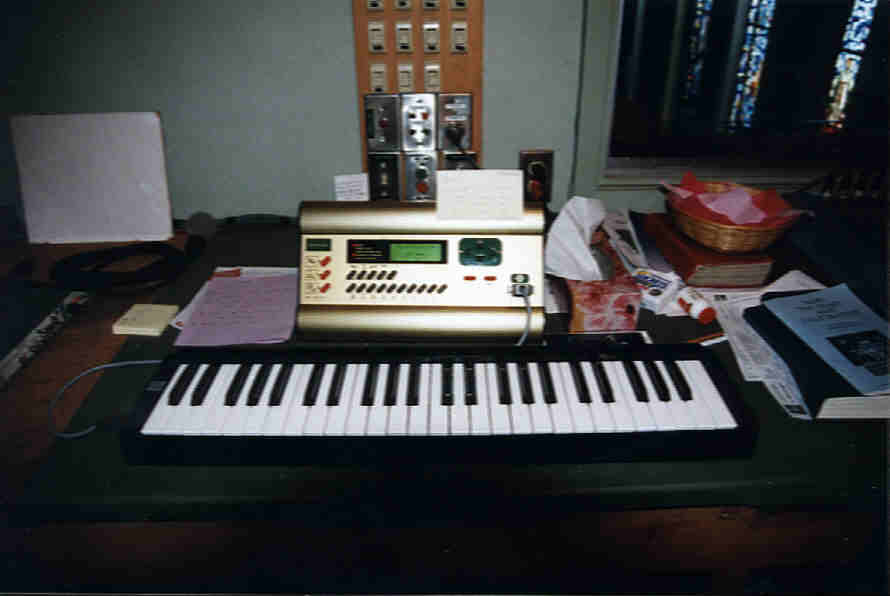
Electric and electric-automatic chimes are anathema to manual chime ringers.
However, they were often installed for good reason.
We see a few being changed back, but the better course to take would be to allow both.
1. A typical keyboard is usually located next to the organ.
The fallacy is that the organist already has enough to do and finds it difficult to give them their adequate attention.
2. At the organ, it is often difficult or impossible to hear them, making playing difficult.
[Right]
This keyboard enters the tunes into an automatic device, which plays them automatically or on command.
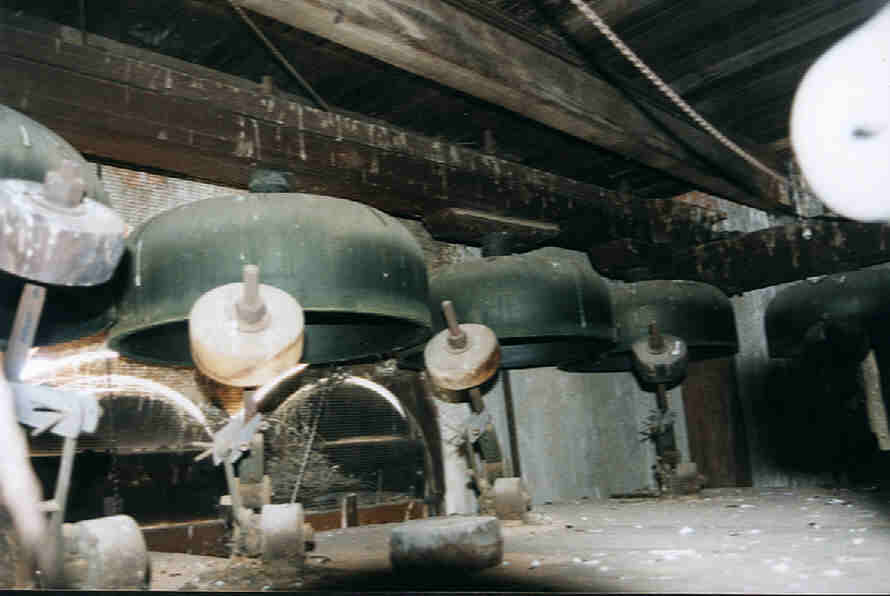
[Left] The hemispherical bells of a chimola.
[Right]
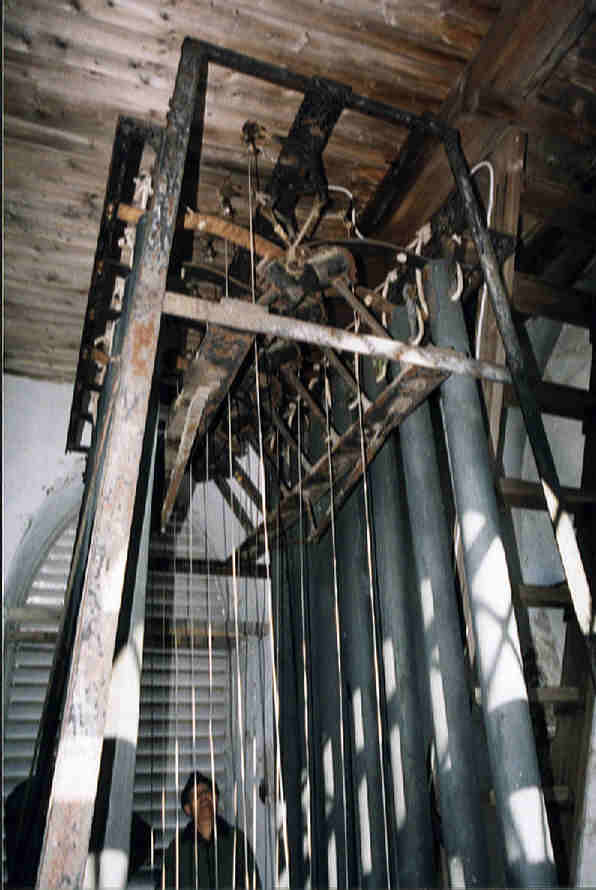
These are tubular bells.
They are usually set up in 2 columns.
1. There are several hundred of them, mostly electric (and many unused for electrical problems).
So what is new?
That's the same problem with electrified chimes.
2. This manual set is at Brockville, Ontario, by Harrington & Latham, Coventry, England.
3. Deagans are all electrified; Harrington, Durfee and others are manual.
(Durfee and U.S.Tubular are very similar to Harrington, because Durfee was the sole American agent for Harrington's atents).